Top 5 Tools for Low Voltage Cables
When it comes to cable installation, success lies in preparation, precision, and the right set of tools. Whether you're running cables through a data center, a commercial ceiling, or a residential crawlspace, the job can quickly become messy, time-consuming, or even hazardous without proper equipment. Tools that guide, organize, and protect your cable during the installation process make a massive difference in quality and efficiency. For both professionals and serious DIYers, using purpose-built gear minimizes damage, saves time, and ensures a professional finish. In this article, we’ll explore five of the best tools for Low Voltage Cables—each designed to help you route, manage, and secure cables like a pro.
1. Cable Pulley
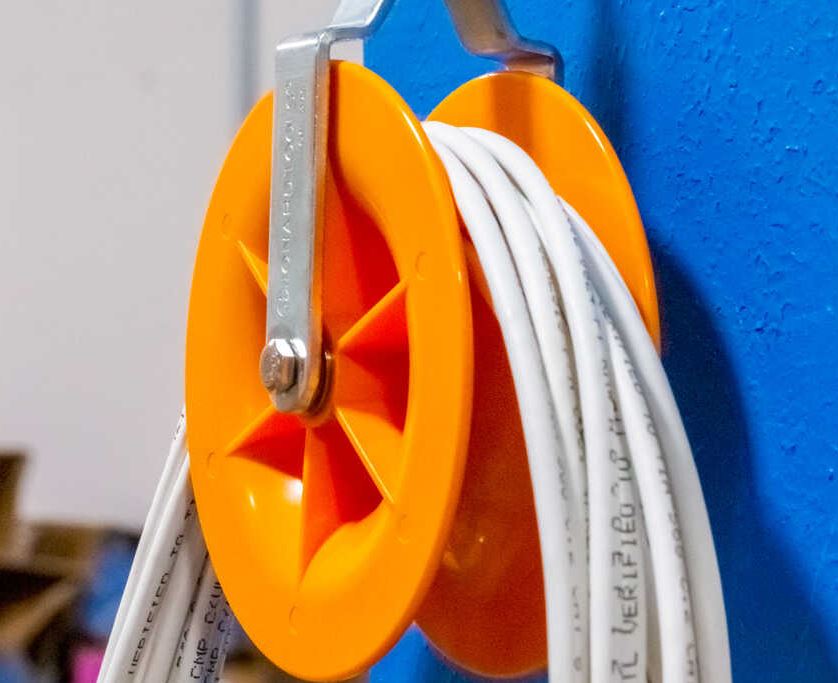
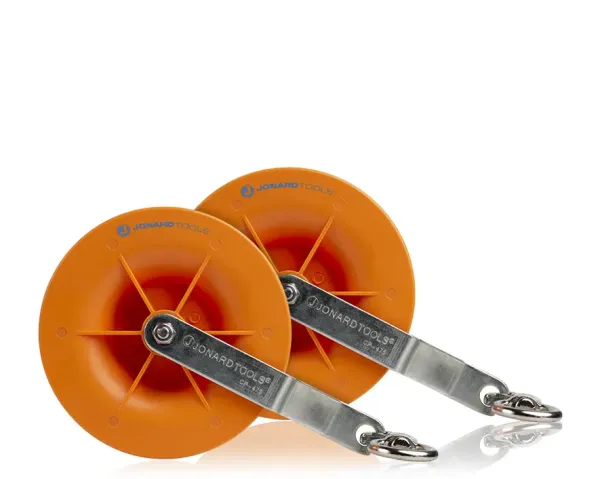
A cable pulley is a rotating wheel mounted on a bracket or hook, designed to guide and support cables as they are pulled across long distances or elevated areas. These tools are often used in environments like construction sites, warehouses, and data centers where heavy or bundled cable runs are required. The pulley reduces the friction between the cable and structural edges, preventing abrasions, snags, or undue tension. It also helps maintain control over cable direction, especially when the run changes elevation or crosses corners.
To use a cable pulley, secure the device to an overhead beam, anchor point, or ladder rung using a strap or clamp. Feed the cable through the pulley wheel, then begin your pull from the opposite end. The rotating wheel ensures a smooth glide as the cable moves, reducing effort and avoiding jerky motion. This makes the process faster and safer, especially when multiple installers are working together. The pulley also extends cable lifespan by preventing the insulation from rubbing on sharp surfaces. It’s a must-have for any job that involves long cable runs with directional changes.
2. Cable Funnel Drop Ceiling Protector
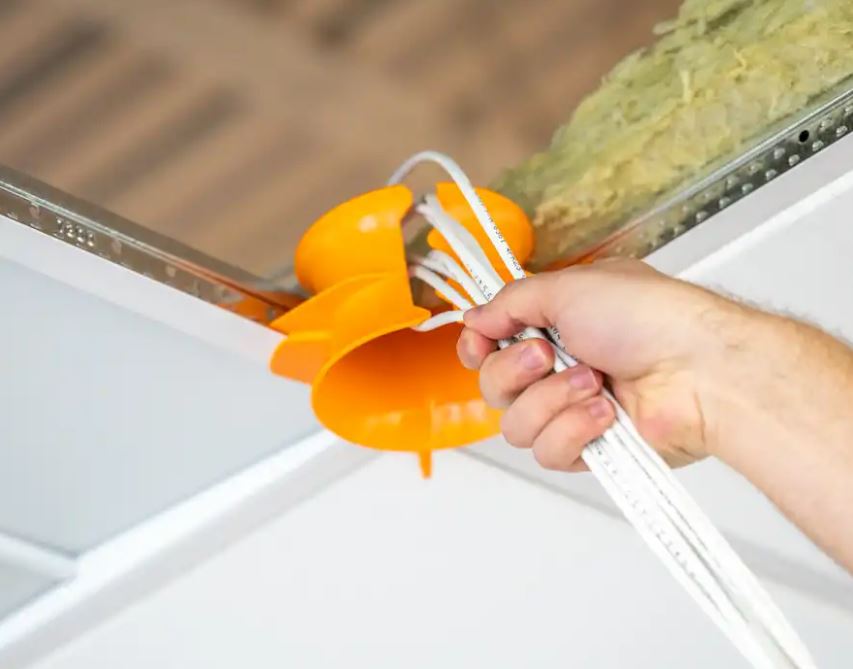
The cable funnel drop ceiling protector is a brilliant, often-overlooked tool that simplifies cable routing through ceiling tile openings. It’s a funnel-shaped insert that sits in the edge of a ceiling tile grid, guiding cables through a smooth surface while protecting the tile from cracking or fraying. This tool is especially useful in commercial installations where aesthetics and ceiling integrity are important. It provides a neat, professional pass-through point for cables without creating unsightly damage.
To use this tool, pop out the ceiling tile where you want your cable to enter or exit, then snap the cable funnel into the T-bar grid or lay-in panel edge. Feed your cable through the funnel as you route it to its next destination, then replace the tile if needed. The funnel keeps the tile edge clean, distributes weight to avoid breakage, and protects cable jackets from sharp tile corners. This small tool goes a long way in reducing rework and improving visual presentation—especially when clients expect both performance and cleanliness.
3. Cable Comb (Cable Organizing Tool)
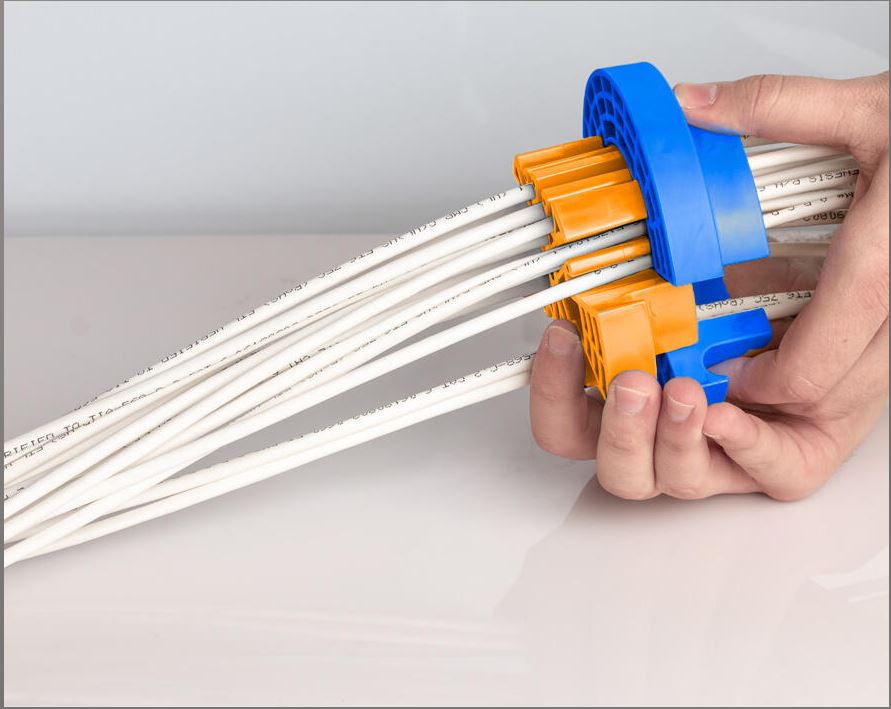
The cable comb is a wire management device used to align and untangle bundles of cables into a parallel, professional-looking formation. It’s particularly useful in data centers, AV setups, and any job where cable organization directly affects airflow, aesthetics, or performance. The tool features evenly spaced holes that hold individual cables and guide them into place as you slide the comb along the bundle. This results in a straight, uniform cable run with no twists, overlaps, or clutter.
To use a cable comb, insert each cable into a designated slot on the comb according to size or color coding. With even pressure, slide the comb down the bundle while holding the cables taut. This smooths out kinks and straightens cables into a clean, organized formation. The process takes seconds and yields results that would otherwise require tedious manual alignment. A well-combed bundle not only looks better—it reduces heat buildup, improves serviceability, and makes cable identification easier. It’s an essential finishing tool for any structured cabling job.
4. Cable Caddy
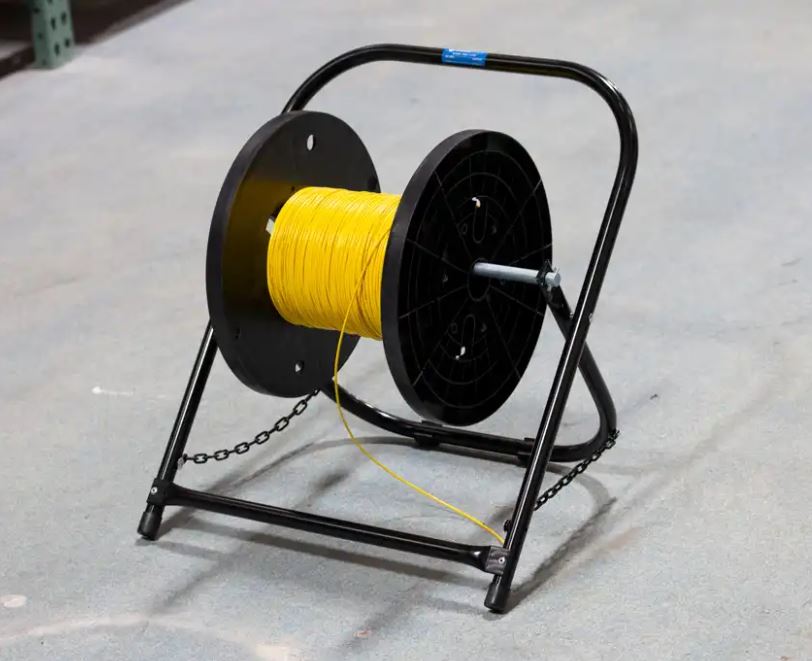
The cable caddy is a portable stand designed to hold spools or coils of cable and allow them to unwind smoothly during installation. Caddies prevent tangling and unspooling chaos, helping installers maintain control over cable length and tension. Most models are made of heavy-duty metal with a central rod or reel holder, and some include wheels for mobility. They’re commonly used for network, coaxial, or electrical cable rolls on job sites and in workshops.
To operate a cable caddy, place your spool onto the rod and make sure it spins freely. Pull cable directly from the spool while the caddy holds it steady and rotates with minimal resistance. This setup keeps the cable from kinking or curling as it feeds out, making long pulls or multiple drops much easier. It also prevents the cable from dragging on the ground, which can collect dirt or damage the jacket. The cable caddy improves safety and speeds up work by turning an otherwise unruly process into a clean, controlled feed.
5. Glow Rod

Glow rods are flexible, luminescent fiberglass rods used to push or pull cables through dark, narrow, or hard-to-access spaces such as wall cavities, crawlspaces, and ceilings. These rods glow in low-light conditions, helping installers track their position during routing. Most glow rods come in threaded sections that screw together to create a customizable length, and many feature attachable heads like hooks, loops, or magnetic tips.
To use a glow rod, connect the sections until you’ve reached the desired length. Attach a head suitable for the task—such as a hook to snag pre-run cable or an eyelet to pull line. Feed the rod through the desired path, using the glow feature to spot it visually if needed. Once the rod emerges at the endpoint, connect the cable and pull it through. Glow rods are vital for navigating complex spaces without cutting unnecessary access holes, reducing installation time and improving workflow in difficult environments. They’re lightweight, versatile, and indispensable for in-wall or overhead routing jobs.
Conclusion
No cable installation project is complete without the right tools to ensure efficiency, safety, and a clean finish. The five tools covered—cable pulley, ceiling funnel protector, cable comb, cable caddy, and glow rod—each serve a specific and critical purpose, from guiding and organizing to feeding and protecting your cable runs. Investing in these tools not only enhances jobsite productivity but also improves long-term cable performance and customer satisfaction. Whether you're wiring a new office, upgrading infrastructure, or setting up a smart home, these tools will elevate your craftsmanship to professional standards. Equip yourself with the best, and every install becomes smoother, faster, and cleaner.
Comments
Login or Register to post comments.