

Data Centers: The Skilled Labor Shortage
The Skilled Labor Shortage Threatening Data Center Construction - And What It Means for the Industry
The AI boom is driving an unprecedented wave of data center construction. But without enough qualified hands to build it, the infrastructure race may be running out of road.
The Numbers
The data center industry is in the middle of a historic buildout. Over 400 data centers are currently under development by major tech companies like Amazon, Google, and Microsoft, with more than 3,000 projects either under construction or in the planning pipeline nationwide. The scale is staggering, and so is the workforce gap standing in its way.
As of late 2025, the construction industry is facing a shortage of roughly 439,000 workers, with skilled trades like electricians, pipe layers, and low-voltage technicians among the hardest-hit positions. Looking ahead, the Associated Builders and Contractors projects that the industry will need to bring on an additional 456,000 new workers by 2027, a 30.7% increase over already-elevated 2026 projections.
The consequences are already being felt. Construction firms taking on data center projects are reporting backlogs of close to a year. Costs are climbing, timelines are slipping, and the gap between demand and available talent shows no signs of narrowing on its own.
Why Data Centers Are Different From Other Construction Projects
Not every construction job requires the same skill set, and data centers sit at the complex end of the spectrum.
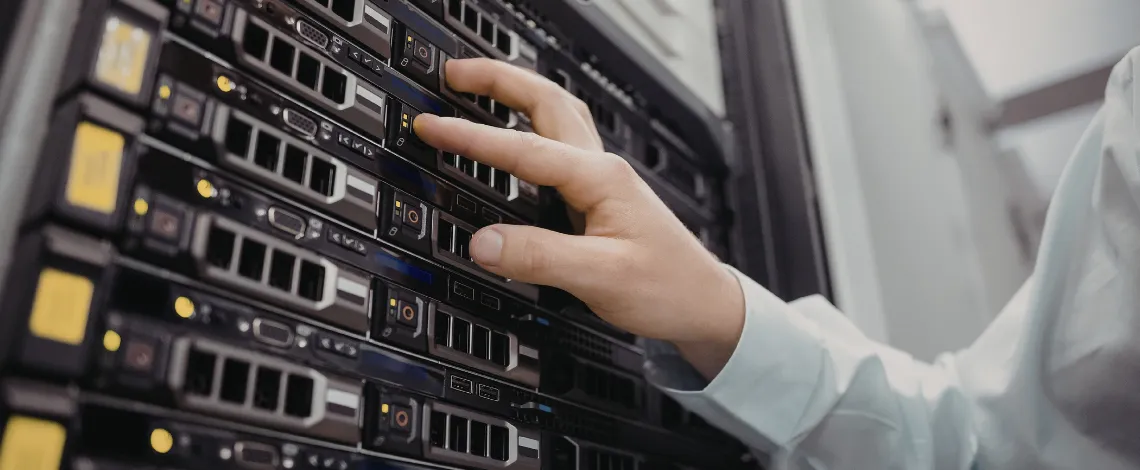
A hyperscale facility isn't just a warehouse with servers. It requires dense, coordinated work across electrical, mechanical, plumbing, and low-voltage systems all running in parallel, under compressed schedules, with zero tolerance for error. A single fiber connection installed incorrectly can take down a rack. A contaminated connector can cause latency spikes across thousands of workloads. At this scale, precision is critical.
According to JLL's 2026 Global Data Center Outlook, the sector could add roughly 97 GW of capacity between 2025 and 2030, effectively doubling global capacity. Global construction costs have already risen from $7.7 million per megawatt in 2020 to $10.7 million per megawatt in 2025. Labor is a significant driver of that increase.
The workers who can do this job, particularly those with fiber optic installation experience, low-voltage certification, and hands-on data center familiarity, are in exceptionally short supply. The AI data center boom faces an estimated shortage of nearly 200,000 fiber-optic technicians alone.
The Long Game
Faced with mounting pressure, major operators and industry organizations are beginning to invest in workforce development at scale.
In April 2026, Meta and CBRE announced LevelUp, a free four-week training program designed to recruit and train thousands of fiber technicians for U.S. data center construction with no prior experience. Graduates are connected to contractor networks and placed on active construction sites. Google's STAR program partners with community colleges and nonprofits to train workers in fiber optic deployment. Amazon has launched its Information Infrastructure Pre-Apprenticeship Program, covering electrical and mechanical systems, fiber installation, and data center operations.
These programs are meaningful, but for newer techs on the job, easy-to-use tools and curated tool kits are essential.
The Hidden Cost: When Inexperienced Hands Meet High-Stakes Infrastructure
The labor shortage isn't just a scheduling problem, but also a quality problem.
When the workforce is stretched thin, contractors are forced to use less experienced workers on increasingly complex projects. In fiber-dense environments, this creates real risk. High-density MPO/MTP connector arrays, ribbon fiber installations, and bend-insensitive cabling all demand a level of hands-on precision that takes time to develop. A technician who hasn't been trained on proper fiber cleaning techniques, correct tool usage, or inspection protocols can introduce contamination or installation errors that are costly to find and even more costly to fix.
The data is clear: improper fiber installation is one of the most common sources of signal loss and downtime in data center environments. In a hyperscale facility where tens of thousands of connections are in play, and where a single rack failure can cascade, the margin for error is razor-thin.
This is where the right tools become critical. Giving technicians at every experience level the right equipment, purpose-built for the task, reliable, and easy to use correctly, reduces the skill gap between a veteran installer and someone newer to the field. Proper fiber strippers, cleavers, cleaning solutions, and inspection tools don't just speed up the job. They make it harder to do incorrectly.
What This Means for Contractors and Operators
For construction firms taking on data center work, the labor shortage demands a rethink of how work is planned, staffed, and equipped.
Standardize your toolkits. When workers come and go more frequently, and when experience levels vary widely across crews, having a standardized set of tools reduces variability in outcomes. A technician who picks up an unfamiliar tool mid-project is a liability. A technician who picks up the same kit they trained with is not.
Invest in hands-on training. Industry programs like STAR and LevelUp are valuable pipelines, but internal training, especially on tool handling, fiber inspection, and installation best practices, pays dividends immediately. Short, focused lab sessions can meaningfully reduce rework rates.
Treat tools as a risk management investment. In a market where construction backlogs stretch to a year, a project delay caused by faulty fiber installation costs far more than the tools that could have prevented it. The ROI on proper equipment is no longer a purchasing question, but instead a risk management conversation.
Build relationships with training ecosystems. Partnering with certification programs like BICSI and FOA creates a pipeline of technicians who arrive already familiar with the standards and techniques your project requires.
How Jonard Tools Is Helping Close the Gap
As the global leader in fiber optic tools, Jonard Tools has a direct role to play in addressing the workforce challenge facing the data center industry. The company's contribution isn't about replacing skilled labor. It's about making the labor that's available as effective as possible.
Equipping the next generation of technicians. Programs like Meta's LevelUp and the FBA's OpTIC Path are producing thousands of new fiber technicians on compressed timelines. These workers arrive motivated but without years of field experience behind them. Jonard's fiber optic tool kits are assembled specifically to give technicians everything they need in a single, standardized package, removing the guesswork about what to carry and reducing the chance of using the wrong tool for the job.
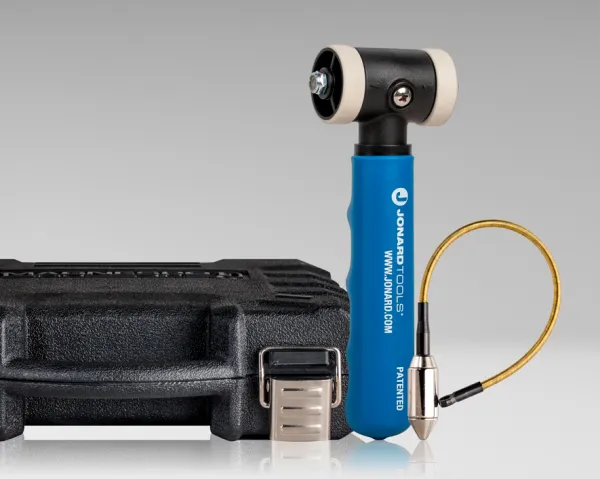
Simplifying the hardest parts of fiber installation. High-density data center environments push even experienced technicians. MPO/MTP connector arrays, ribbon fiber, and tightly managed cable runs all require precision that doesn't forgive improvisation. Jonard's fiber strippers, cleavers, and mid-span access tools are engineered for exactly these conditions - purpose-built for the tolerances that modern data center infrastructure demands.
Making fiber cleaning fast and foolproof. Contaminated connectors remain one of the top causes of signal loss and unplanned downtime in data center environments, and they're disproportionately introduced by workers who don't yet have the instinct to clean before connecting. Jonard's fiber cleaning kits take the guesswork out of the process. From the MPO-specific FCCS-120 Fiber Connector Cleaner to comprehensive cleaning kit bundles, Jonard puts professional-grade cleaning capability in the hands of any technician, regardless of experience level.
Supporting training programs where they happen. Jonard actively partners with fiber optic training programs and certification bodies, including the FOA,BICSI, and OpTIC Path to put the right tools in the hands of students learning the craft. The TK-615 Advanced Fiber Optic Prep & Clean Kit, for example, was designed specifically with training environments in mind, giving instructors and students a comprehensive, cohesive tool set for hands-on labs.
Standardizing across crews and sites. On large-scale data center projects where crews rotate and subcontractors come and go, inconsistency kills productivity. Jonard's data center-focused kits, including the TK-DC03 Data Center Operations & Maintenance Kit , are designed to be deployed at scale, giving project managers a reliable way to standardize what every technician on site is using, from day one to commissioning.
The tools won't solve the labor shortage, but they can meaningfully raise the floor on what a less-experienced workforce is able to accomplish, while lowering the risk that a tight construction timeline becomes a costly rework scenario.
Jonard Tools designs precision instruments for the professionals building the infrastructure that powers the modern world — from fiber strippers and cleavers to mid-span access tools and fiber cleaning solutions purpose-built for data center environments. Learn more at jonard.com.
Comments
Login or Register to post comments.