A Lineman's Guide: 5 Essential Tools for Utility Industry
Utility projects run on tight outage windows, strict safety requirements, and zero tolerance for rework. In that environment, precision isn’t optional: each cutting depth, chamfer, setback, and torque value shapes electric-field stress, sealing performance, and the long-term reliability of terminations and splices. Consistent results come from disciplined processes as well as having the right tools for the job. This guide highlights the essential tools for the job, explaining why they reduce risk, shorten restoration time, and improve lifecycle performance across distribution networks.
1) Utility Cable Jacket and Insulation Stripper

What it is
A utility cable jacket and insulation stripper is a precision-engineered tool used by electrical and utility technicians to remove both the outer jacket and insulation layers from medium voltage cables. The tool is designed to accommodate a wide range of cable diameters and insulation thicknesses, allowing for clean, repeatable stripping without damaging the conductor or underlying layers. Unlike basic handheld knives or single-function strippers, this tool integrates two critical steps, jacket removal and insulation stripping, into a single device. It provides adjustable depth control, consistent cutting geometry, and smooth operation, ensuring the technician can achieve professional-quality results every time.
How it works
The tool operates on a rotational cutting principle. It is clamped around the cable and rotated along the cable’s axis, stripping the outer jacket and insulation with precision-engineered blades. Once the desired depth and strip length are set, the tool makes a clean spiral or circumferential cut, allowing the jacket or insulation layers to be easily removed.
Key features include:
- Adjustable blade depth to prevent damage to the conductor.
- Calibrated settings for both jacket and insulation removal.
- Spiral and circumferential cutting functions for versatility and accuracy.
- Ergonomic design to reduce operator fatigue during repetitive tasks.
By maintaining consistent cutting depth and angle, the tool ensures that each cable is stripped to exact specifications, a critical requirement for proper terminations and reliable electrical connections in medium voltage systems.
Why it’s important
When preparing medium voltage cables, even a small error can compromise insulation integrity, leading to partial discharge, overheating, or failure over time. Using a dedicated utility jacket and insulation stripper ensures precise, repeatable cuts that protect both the conductor and the technician. The risk of accidental nicks or gouges, common when using knives or improvised tools, is virtually eliminated.
2) Cable Insulation End Chamfer Tool
What it is
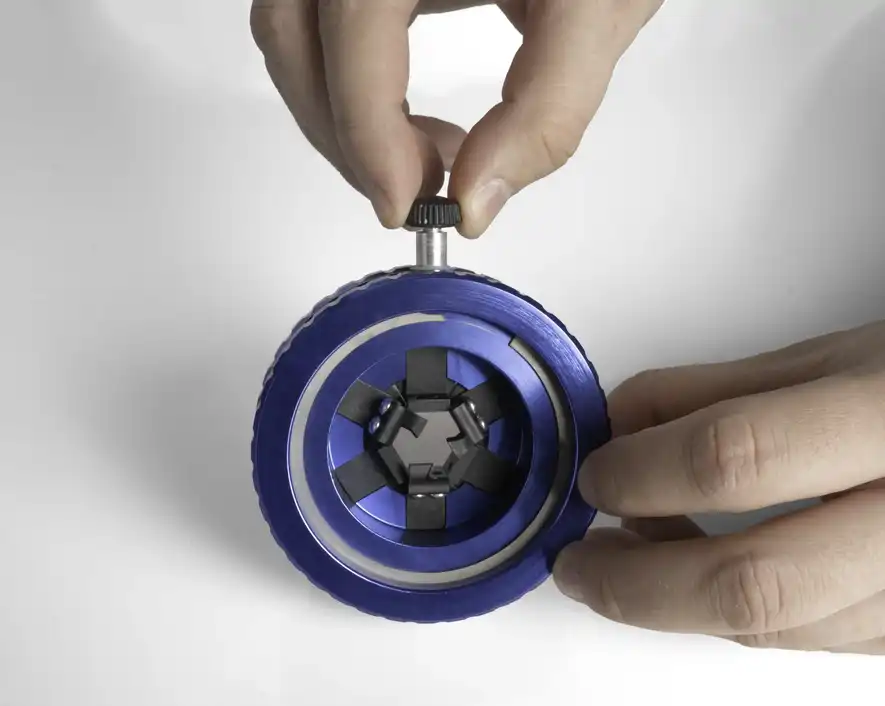
A cable insulation end chamfer tool is a specialized beveling instrument that forms a uniform taper on the edge of medium-voltage insulation. It is engineered for common insulation polymers such as XLPE and EPR and typically provides fixed or adjustable bevel angles within industry norms. The body rides on the insulation while a hardened blade cuts a controlled chamfer to eliminate sharp shoulders. Professional versions include replaceable cutters, depth limiters, and anti-clog features so debris clears without gouging the insulation.
How it works
After the insulation is stripped to length, the chamfer tool is seated squarely on the cable and rotated with steady pressure. The guide face keeps the cutter aligned while the blade shaves the insulation shoulder into a smooth, repeatable taper. This continuous bevel removes stress-raising discontinuities and blends the insulation profile into the area where field grading materials will be applied. Because the tool references the cable itself, it delivers consistent geometry around the full circumference, even in cramped vaults or pad-mounts.
Why it’s important
A sharp 90-degree insulation edge concentrates electric stress and invites partial discharge, tracking, and premature termination failure. A precise chamfer spreads the field, improves the bond of stress-control mastics or tubes, and reduces the chance of installation damage during assembly. It also standardizes craftsmanship across crews, so terminations look and perform the same regardless of who builds them. In practical terms, proper chamfering protects capital equipment, reduces callbacks, and extends service life in harsh environments.
3) Ratcheting Lineman’s Wrench

What it is
A ratcheting lineman’s wrench is a heavy-duty, double-ended box wrench with integrated gear mechanisms sized for common utility hardware. Heads are typically offset and deep to clear protruding studs, pole line hardware, and transformer lugs. Standard combinations cover square and hex fasteners found on clamps, dead-ends, crossarm braces, and service hardware. Premium models feature forged bodies, 72-tooth or finer pawls for small arc swings, and insulated or high-grip handles for control with gloved hands.
How it works
Inside each box end, a pawl-and-gear system allows the wrench to turn a fastener in one direction while freewheeling in the other. The lineman sets the desired direction, places the offset head over the nut, and cycles short strokes without lifting the tool off the hardware. The deep offset keeps knuckles clear and maintains alignment on long threads or stacked washers. Because the mechanism captures the fastener, it reduces slipping and rounding, especially when torquing in awkward positions on poles, in buckets, or inside cabinets.
Why it’s important
Fast, secure assembly of mechanical connections protects conductor alignment, hardware integrity, and worker safety. A ratcheting wrench shortens cycle times on repetitive tasks and reduces fatigue compared with open-end wrenches that require constant repositioning. It also delivers more consistent torque, which helps prevent loose connections that can vibrate, arc, or back off under load. Over the course of a shift, the productivity and quality gains from proper ratcheting tools compound into fewer reworks and tighter outage control.
4) Medium-Voltage Utility Semicon Scoring Tool

What it is
A medium-voltage semicon scoring tool is a precision tool for removing the semiconductive layer from MV power cables without scoring the underlying insulation. This semicon layer serves as a conductive shield around the insulation, equalizing the electric field and preventing partial discharges. However, when terminating or splicing MV cables, this layer must be carefully removed to expose the insulation beneath.
Unlike makeshift methods involving knives or utility blades, a dedicated semicon scoring tool provides controlled depth adjustment, precise scoring alignment, and repeatable results. It is designed to accommodate a range of cable sizes and semicon thicknesses while maintaining a perfectly smooth transition between the scored area and the insulation.
How it works
The semicon scoring tool is clamped around the prepared section of the cable and rotated along its axis. Its precision blade makes a shallow, uniform score in the semicon layer — not a full cut — ensuring that only the conductive coating is penetrated. Once scored circumferentially and longitudinally, the semicon layer can be peeled or lifted off easily, leaving the insulation intact and undamaged.
Key features typically include:
- Adjustable blade depth control to prevent insulation damage.
- Calibrated scoring guides for consistent results across multiple cables.
- Rotational and longitudinal cutting capabilities for complete coverage.
- Ergonomic housing for improved comfort and stability during operation.
Some advanced models may also feature quick cable size adjustments and non-slip handles to enhance safety and accuracy, particularly when working in field conditions or confined spaces.
Why it’s important
In medium voltage systems, a flawless transition between the semicon layer and insulation is critical. Any irregularities, gouges, or residual semicon material can lead to electrical stress points and premature cable failure. A semicon scoring tool ensures a clean, concentric score every time, maintaining the insulation’s integrity and the system’s long-term reliability. The difference between a properly scored semicon layer and a damaged insulation layer can be fractions of a millimeter. This tool provides precision control that no handheld knife can match. With adjustable depth settings and guided motion, technicians can work confidently, knowing the blade will not cut too deeply or unevenly.
5) Utility Cable Stripping Stop Clamp
What it is
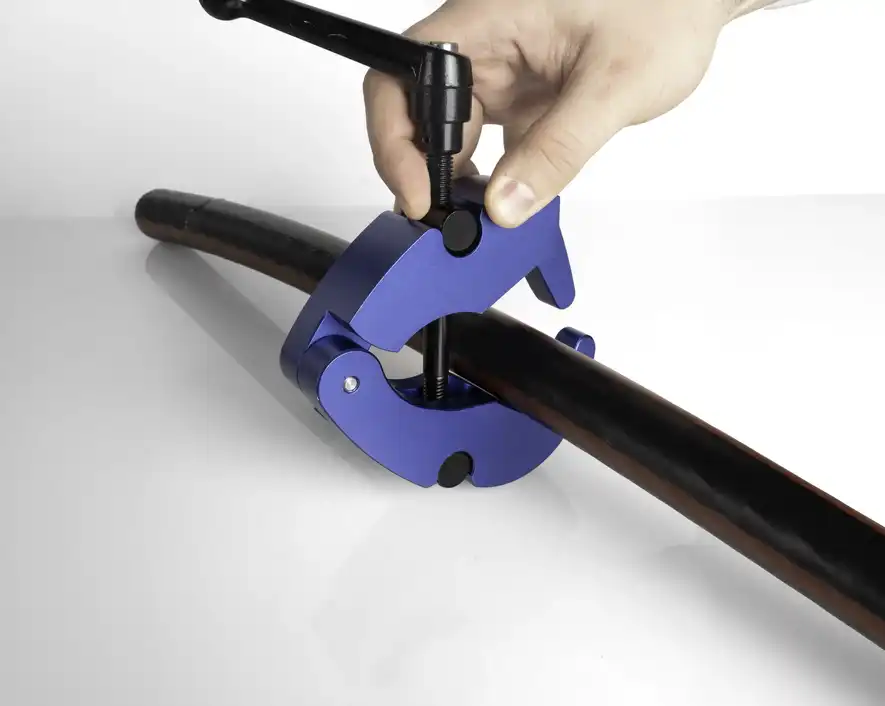
A utility cable stripping stop clamp is a positionable collar that clamps around the cable to create a hard stop and stabilizer for jacket, insulation, and semicon stripping tools. Constructed from machined aluminum or steel with protective liners, it resists slipping while protecting the jacket surface. Graduations and reference flats help set precise cutback lengths in accordance with splice and termination instructions. Many versions include quick-action latches or captive screws for rapid placement even in confined spaces.
How it works
The installer measures the required cutback length, sets the clamp at that point, and tightens it so it cannot migrate during cutting. When a rotary or spiral stripping tool reaches the clamp, the housing shoulder halts forward progress and prevents over-travel. The clamp also acts as an anti-rotation anchor, giving the technician a firm reaction point so the blade tracks straight and depth remains uniform. Because the stop is mechanical, it removes guesswork and maintains repeatability across multiple identical terminations.
Why it’s important
Over-stripping or inconsistent cutbacks cause fit issues with stress cones, shields, and sealing components, leading to rework and schedule slip. A stop clamp enforces dimensional control, ensuring every termination and splice matches the kit’s design tolerances. It also reduces accidental blade contact with layers that should remain intact, preserving dielectric strength and surface finish. For utilities managing large volumes of identical joints, this simple tool is a low-cost way to drive quality, speed, and safety at the same time.
Conclusion
Medium-voltage terminations and splices demand precision at every step, from jacket removal to final stress control. The five tools above create a controlled, repeatable workflow that protects insulation, standardizes geometry, and accelerates assembly. When crews are trained to use them correctly, the results are fewer defects, shorter outage windows, and longer service life for critical assets. In the utility industry, that combination translates directly into reliability metrics that customers feel and regulators measure.
Comments
Login or Register to post comments.